Villa Interior Design in Riyadh: Luxury Styles Trending in 2026
A homeowner in Al-Malqa recently spent three months selecting a design firm before signing anything. Not because options were scarce Riyadh has more interior designers than ever. But because they had walked through enough finished villas to know the difference between a space that photographs well and one that actually feels right to live in.
That distinction is everything in 2026. The city’s high-end villa market has moved well past the phase where luxury meant volume more marble, more gold, more surface area covered in pattern. What serious homeowners are chasing now is harder to name and harder to fake. Call it considered design the kind where every decision has a reason.
How Riyadh’s Design Taste Has Changed
Ten years ago, the benchmark for a luxury villa in Riyadh was largely about material cost. It involved imported Italian marble, custom chandeliers, and layered fabrics in every room. The goal was abundance. It communicated success in a way that was immediately legible to anyone who walked through the door.
That logic still exists. However, it’s no longer the dominant one. A generation of homeowners who studied abroad, traveled frequently, and spent time in foreign cities. They returned with different reference points. Especially when it comes to luxury, having one well-placed object carried more weight than a room full of them.
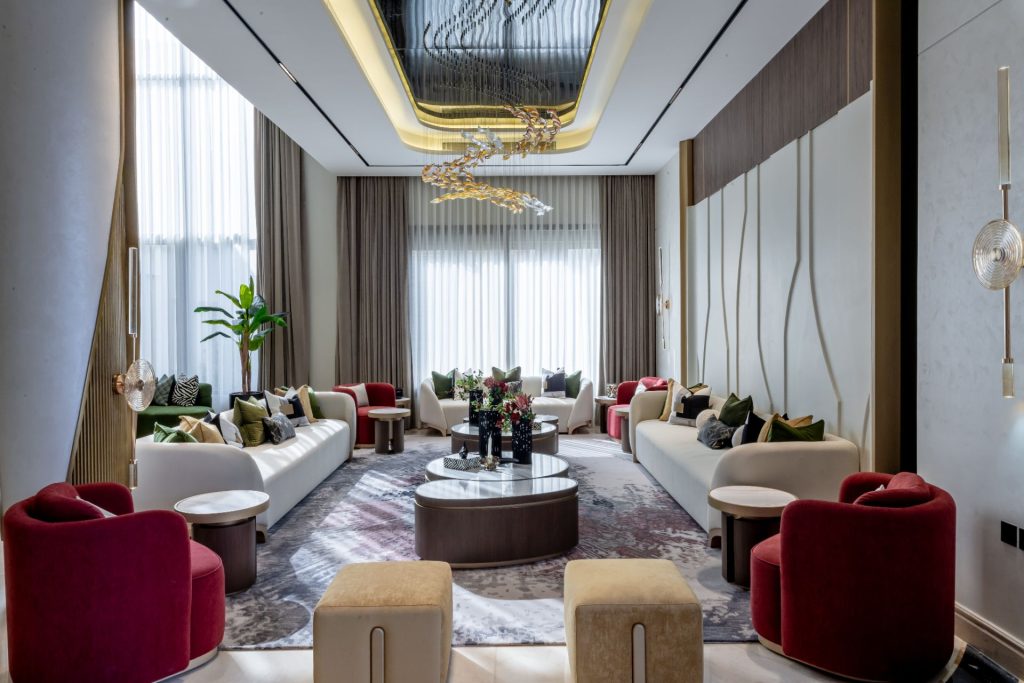
The result is a market where villa interior design in Riyadh has split into two distinct directions. One group still wants the traditional language of Gulf luxury grand reception rooms, ornate ceilings, a formal grandeur that reflects the scale of the property. The other group wants something quieter. More personal. Harder to replicate.
Both are legitimate. But the firms doing the most interesting work in 2026 are the ones that can move between both registers without defaulting to a formula. We already covered interior design planning So, now let’s explore the different types of the most prominent interior designs in Riyadh and wholeSaudi Arabia.
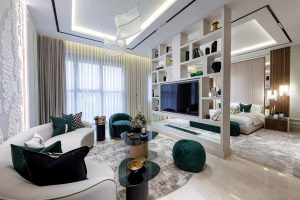
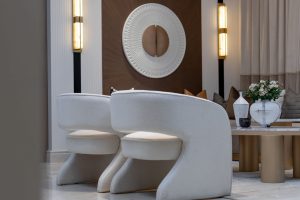
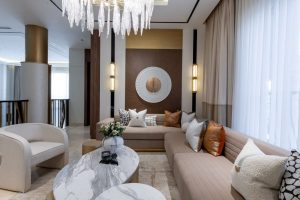
Contemporary Arabian Fusion: Still the Most Requested Style
Ask any established design firm in Riyadh what style they’re executing most frequently in 2026, and the answer will almost always be some version of Contemporary Arabian fusion traditional Saudi and Islamic design vocabulary brought into conversation with modern proportions and restraint.
The look is specific enough to picture. A majlis reception room with walls finished in raw limestone plaster. They are rough enough to catch the afternoon light differently from the morning light. Moreover, the seating is arranged low to the ground in the traditional manner. However, upholstered in a single, unbroken tone, no pattern, no fringe. A geometric mashrabiya screen separates the entrance from the main sitting area. No chandelier, just recessed light tracing the ceiling perimeter. Lastly, a single sculptural floor lamp grounds one corner of the room.
Five years ago, that room would have felt underdressed for a villa of any scale. Today, it reads as the most confident thing in the building. The Contemporary Arabian style holds up because it doesn’t ask residents to choose sides. Heritage or modernity. Traditional or contemporary. For families in Riyadh where both identities carry real weight, a space that holds them together without forcing a choice resonates in a way that purely imported Western aesthetics simply cannot.
Biophilic Design: More Than a Trend
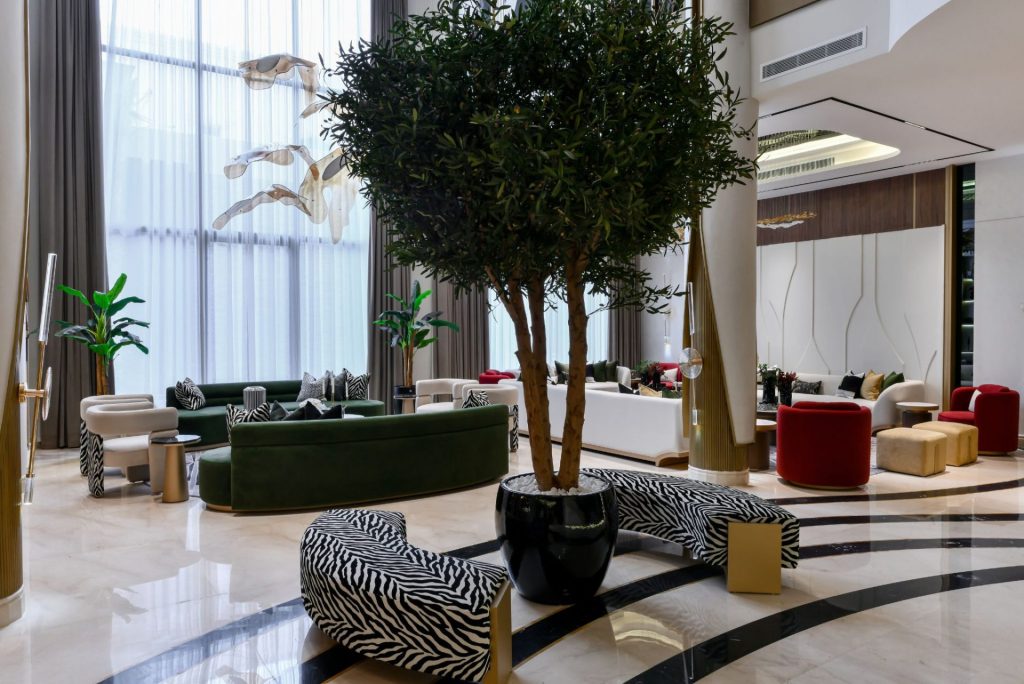
Biophilic design spaces built around natural materials, living plants, organic textures, and the sensory qualities of the outdoor world has been circulating in design publications for years. In Riyadh’s villa market in 2026, it has moved from a trend category to a near-universal expectation for serious projects.
The reasoning isn’t purely visual. Research in environmental psychology is consistent: rooms that incorporate natural materials and greenery reduce measurable indicators of stress and improve sleep quality for occupants. For families in Riyadh who spend significant portions of the year indoors due to extreme summer heat, that’s not a decorating preference it’s a meaningful quality-of-life factor.
One project in the Al-Yasmin district was designed around a brief that a designer there described simply as: the garden should feel like it grew into the house, not like the house was dropped into the garden. The execution ran a continuous travertine floor from the main interior lounge, through a fully retractable glass wall, and out to a covered terrace with overhead planting.
A living wall irrigated, maintained by the building’s smart system ran the full height of the corridor connecting the two spaces. The effect was that the interior and exterior felt like one continuous room, just with different weather.
That kind of integration requires planning from the earliest architectural design stages. It cannot be retrofitted, which is exactly why biophilic briefs have pushed homeowners toward engaging designers before construction rather than after.
Warm Minimalism: The Style That’s Harder Than It Looks
Here is something that most design content won’t say directly: warm minimalism is significantly more difficult to execute well than traditional luxury maximalism. Most people assume the opposite.
With maximalism, visual richness creates its own camouflage. A room full of patterns, texture, and objects has enough going on that individual decisions disappear into the whole. Mistakes are absorbed. Scale can be slightly off, a piece can be wrong, and the overall effect still reads as intentional.
Warm minimalism has no such mercy. Every element in a spare room carries full weight. A sofa that’s ten centimeters too low changes the entire proportion of the space. A light fitting with slightly too much visual metal in it destroys the warmth that the whole palette was built to create. There’s no visual noise to soften errors.
Material Language of the Style
The material language of the style is precise: undyed wool and natural linen for upholstery, aged brass over polished chrome, hand-thrown ceramics rather than factory-finished pieces, plaster walls with visible tool marks rather than a smooth machine finish. The rooms are uncluttered but never empty. Settled, not stripped. Breathing, not bare.
Homeowners who attempt this direction without a designer who genuinely understands it tend to arrive at one of two outcomes: a room that feels uncomfortably bare, or a room where over-correction has pushed it back toward maximalism. The tolerance for error is genuinely narrow and recognizing that early is what separates a successful project from an expensive lesson.
Smart Home Technology: The Best Installations Disappear
The visible smart home era is effectively over for premium villa projects in Riyadh. The feature walls of screens, the control panels that dominated an entire wall of the home office, the speaker installations that announced themselves as design features all of that has retreated from serious residential work.
What has replaced it is integration so thorough that technology effectively disappears. Motorized blinds retract into ceiling reveals that were designed around them from the beginning. Lighting control operates through panels that are visually indistinguishable from standard switches. Audio runs through panels behind architectural wall finishes rather than mounted hardware. Climate control operates through chilled floor and ceiling systems with no visible units.
Well-Integrated Smart Home
The standard for a well-integrated smart home in 2026 is straightforward: guests should not notice the technology. They should notice that the temperature is exactly right, the lighting shifts effortlessly between settings throughout the day, and the terrace becomes a private outdoor cinema without any visible equipment. The system should be felt, not seen.
Achieving that level of integration is entirely a planning problem. The interior designer and the AV or building automation contractor need to work from shared drawings before any walls close or ceilings are finished. Projects where the technology team is brought in after the interior scheme is complete almost always end with compromises exposed conduits, speakers in the wrong location, control panels that disrupt carefully considered wall surfaces. It is the single most reliable expensive mistake in villa projects.
What to Ask Before Hiring a Design Firm in Riyadh
The Riyadh interior design market has expanded considerably over the past five years. Established European firms have opened local offices. Studios from Beirut and Cairo have relocated or opened satellite practices. Long-standing Saudi firms have grown their teams. For villa owners, more options are genuinely good but they have made the selection process more demanding.
Portfolio Coherence
Portfolio coherence is the first thing to assess. Firms doing strong work have a visible sensibility across their projects not identical rooms, but a consistent level of craft, proportion, and intentionality. A portfolio that looks assembled from ten completely different design directions usually reflects a practice that executes briefs without contributing real creative leadership. That’s useful for some clients. For owners who want a firm to bring genuine design thinking to a project, it’s a signal to keep looking.
Project Management Structure
Project management structure matters just as much as design quality. A modern villa project in Riyadh typically involves kitchen manufacturers in Germany, bathroom suppliers in Italy, custom joinery from local craftsmen, stone from Turkey or Portugal, and a main contractor overseeing it all on site. Also, it provides estimates for interior design costs in Riyadh. Firms without documented project management processes lose coordination and when coordination fails, it’s always the client’s timeline and budget that absorb the consequences.
The most revealing question to ask any firm being considered: Tell me about a project that ran into serious problems and how you handled it. Supply failures, contractor disputes, material substitutions forced by lead time these happen on every significant villa project without exception. The quality and honesty of the answer to that question tell a homeowner more about a firm’s real character than any portfolio photograph or reference call.
The Villas That Will Define How Riyadh Lives
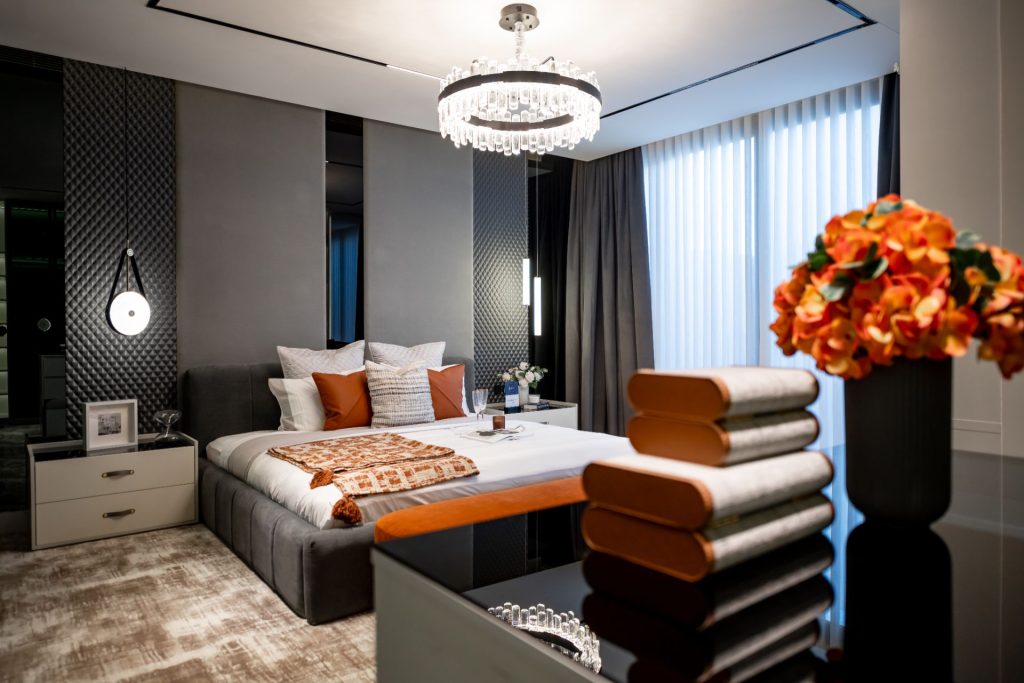
The most considered design work happening in Riyadh right now is not in commercial towers or hospitality flagship projects. It is in private villas where individual owners are making deliberate, personal decisions about the experience of being home.
The styles that define villa interior design in Riyadh are Contemporary Arabian fusion, biophilic environments, warm minimalism, and invisible technology. They are all built around how a space feels to inhabit. It is more than the aesthetics. For villa owners who are ready to close the gap between appearance and experience, the right firm understands the difference and has already built rooms that prove it. Art Deco Design offers the best villa design services in Riyadh. So, feel free to reach out to us for your next project.