Interior Design Planning Before You Begin – Homeowner’s Guide 2026
Most homeowners make the same mistake they start shopping before they start thinking. A sofa that looks beautiful in the showroom feels wrong in the room. A bold wall color that seemed perfect ends up fighting with the light. A layout that made sense on paper blocked every natural path through the space. These are not small problems. They are expensive, and they almost always result from skipping the planning stage.
This guide walks through five phases of interior design planning. Each phase builds on the others to make the work last. If done in order, it will save time and money and the frustration of redesigning what you already paid for.
Phase 1: Set Your Foundation
Before choosing a sofa color or a tile pattern, answer the big questions. These determine every decision that follows.
Who lives here?
Children, elderly parents, pets? Your lifestyle is the single biggest driver of material and layout choices.
How do you use each room?
A living room that doubles as a study needs different planning than one used only for guests.
Light conditions
Map which rooms get morning vs evening sun. The sunlight has an important role. When choosing the paint color, material, and furniture placement, look for this.
Key questions for the journal
Define Your Needs, such as storage, events, workspace, and future family planning.
01 Storage needs
List every item category you need to store. It may include clothes, books, kitchen tools, and children’s toys. Most homes are under-stored, forcing clutter.
02 Hosting frequency
Do you host large gatherings or intimate dinners? Also, this determines dining table size and living room seating layout. Moreover, it will give an idea of the guest room priority.
03 Work from home?
A dedicated workspace requires careful acoustic and lighting planning. An afterthought desk in the bedroom disrupts sleep psychology.
04 Five-year horizon
A growing family, aging parents moving in, or a planned renovation change what “right now” solutions are worth investing in.
Fixed vs flexible
Identify structural walls, windows, utility points, and A/C units. These cannot move or define your canvas.
Pro tip
Monitor everything one week before making a decision. Observe where natural light falls all day. Also, look where traffic paths naturally form. Also, see which corners feel unused.
Phase 2: Find Your Style
Style is about what makes the space feel right to live in. Trends shift every few years. A home that chases them ends up feeling dated and inconsistent. The better approach is to choose a clear direction. Furthermore, understand what makes that style work, and stay consistent with it across every room.
Modern Minimalist
It includes clean lines and a neutral palette. Here, Function leads. Minimalist interior design ideas are what homeowners prefer these days. This style keeps things clean and simple. The colors are neutral, the lines are straight. Also, there is no unnecessary clutter. Every piece has a purpose. If it does not serve a function, it does not belong there.
Contemporary Gulf
It has warm tones, geometric patterns, and ornamental accents. Moreover, it focuses on modern comfort. This style blends modern comfort with regional character. It uses decorative touches that feel familiar without feeling old-fashioned. It is a good fit for homes that want personality without going too traditional.
Scandinavian Design
It includes a white base, natural wood, and hygge comfort. Also, it prefers soft textiles. Scandinavian design is quiet and warm. Simple color, material, and fabrics are the basics. It’s not to impress anyone. It just wants the space to feel easy and comfortable every day.
Biophilic Style
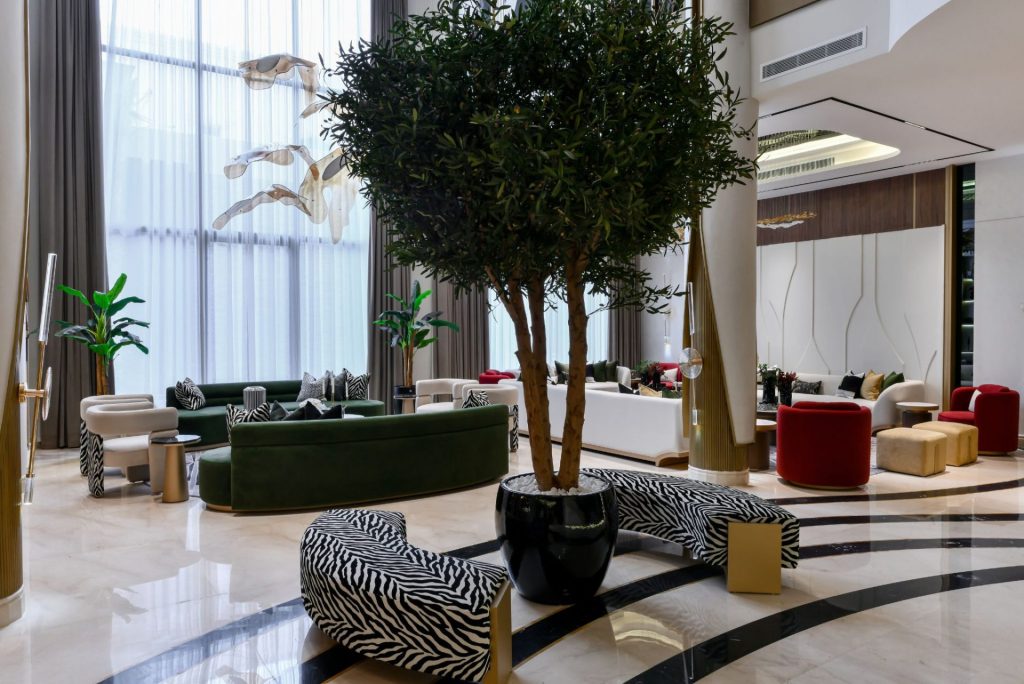
It involves natural materials, plants, and earthy tones. Also, showcases the connection to the outdoors. This style brings nature into the home. Place natural items where possible. Nature always attracts attention. So, a connection to the natural world is necessary. You can use a few plants and wood tones.
Transitional Style
It is a mix of traditional and modern. Also, it is considered the most adaptable style over time. Transitional style mixes old and new. It takes some warmth from classic design and pairs it with cleaner modern lines. It works well for people who do not want to commit fully to one direction. It also holds up well over time because it is not tied to any single trend.
Maximalist Style
It is all about layered textures, bold color, and collected objects. It is curated, not chaotic. But the keyword is curated. Everything in the room is there by choice, not by accident. When it is done right, it feels rich and personal. When it is not, it just feels messy.
Color strategy: Build a Color Palette
A home palette is typically 60 percent dominant, 30 percent secondary, and 10 percent accent. So, choose accordingly before purchasing anything.
60% Dominant
This high percentage includes walls and large furniture. The right color palette for this is neutral. Neutral whites, creams, and warm beiges are the best examples. These colors provide the canvas on which everything else sits.
30% Secondary
This moderate percentage has sofas, rugs, and cabinetry. You can play around with the colors here. However, the [prescribed color tones are a warm stone, cool gray, or muted green. These tones add character without overwhelming.
10% Accent
The accent palette always adds character to your furniture. It includes cushions, art, and fixtures. These pallets must showcase your personality. Let’s say if your personality is deep teal, terracotta, brass, or black for contrast.
Important: Always test paint colors. Do a large swatch in the actual room. Also, do it at different times of day. Colors change dramatically under artificial vs natural light.
Phase 3: Plan Your Layout
Layout is the most underestimated step. A wrong layout makes expensive furniture feel wrong. Get this right on paper first.
Measure everything
Room dimensions, ceiling height, window/door positions, distance between them — in centimeters, not estimates.
Walking flow first
Mark the paths people naturally walk. Main paths need 90–120cm of clear space—secondary paths 60cm minimum.
Anchor with one piece
In each room, one large anchor piece (a sofa, a bed, a dining table) defines the layout. Place it first, and arrange everything else around it.
Scale to room size
Oversized furniture in small rooms suffocates. Tiny furniture in large rooms looks lost. Match visual weight to room volume.
Room-by-room layouts
Keep these Key Layout Rules in mind before designing it.
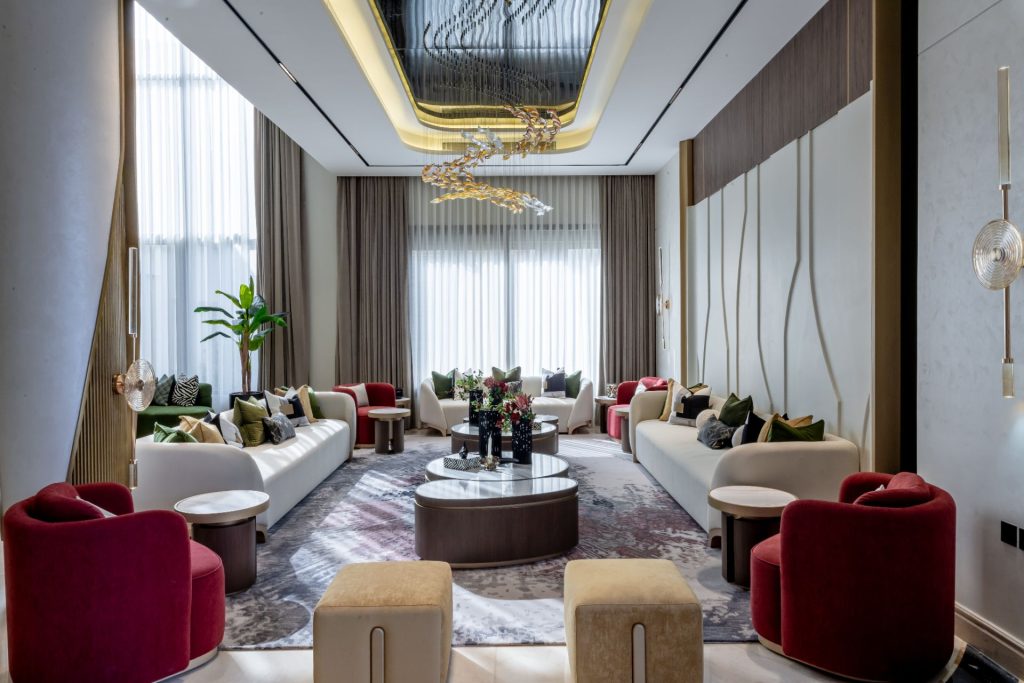
LR- Living room
Sofa facing the focal point (TV, window, or fireplace). Leave 45 centimeters between the sofa and the coffee table. Rugs should be large enough that all seating front legs sit on them.
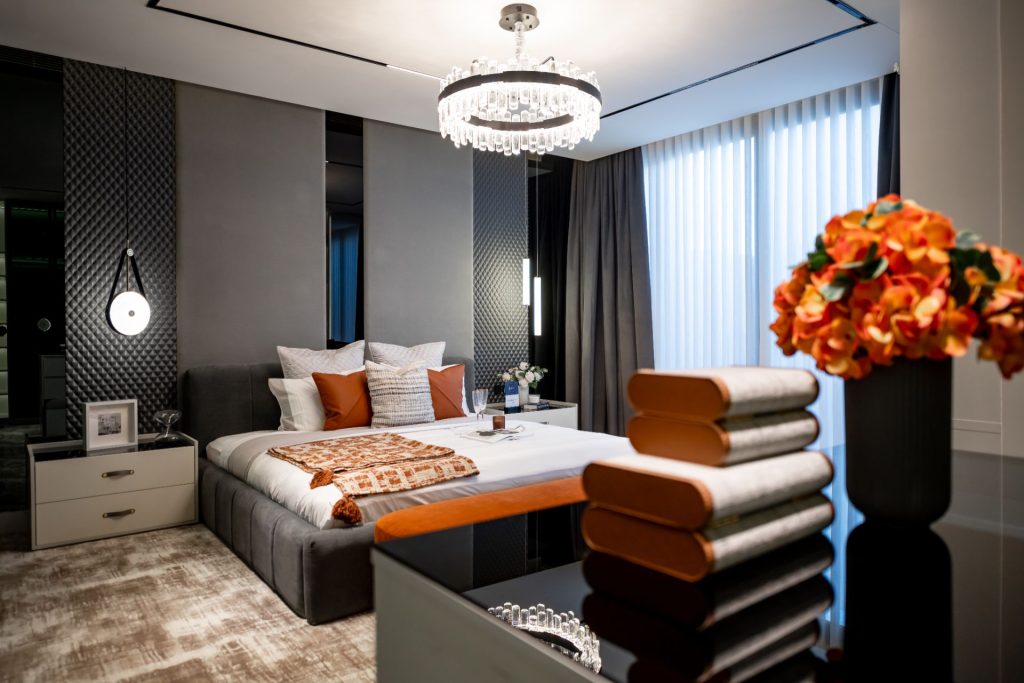
BR- Bedroom
The bed is centered on the main wall, with 60cm of clearance on the sides. Avoid placing the bed directly under the A/C or with the feet toward the door.
KT- Kitchen
Use the triangle rule. The sink, stove, and refrigerator should form a triangle. Its total perimeter is 4–8 meters. Less movement is more efficient.
DI- Dining room
The table needs 90cm of clearance on all sides. It is for chair pull-out and circulation. The chandelier must be in the center of the table.
Use tape on the floor for measurement. Mark out the exact footprint. You can use painter’s tape. This one step prevents expensive mistakes.
Phase 4: Set a Realistic Budget
A common rule: allocate your total budget across categories based on use and visibility. Here’s a starting framework for a typical home.
- Living & dining furniture 25–30%
- Kitchen 20–25%
- Bedroom furniture 15–20%
- Lighting 10–12%
- Window treatments & textiles 8–10%
- Décor, art & accessories 8–10%
- Contingency buffer 10–15%
Budget strategy- Where to Invest vs Save
Invest in a sofa and mattress
You use these every single day. Quality here directly affects your daily comfort and lasts 10+ years. Do not compromise.
Invest in lighting
The most transformative element is after the layout. Layered lighting changes how a room feels at every hour of the day.
Invest in flooring
The hardest thing to change later. Choose quality that will age well and match any future style changes.
Save: trend items
Accent chairs, side tables, and cushions are easy to replace. Buy affordable and upgrade when trends shift.
Save: décor and accessories
Art, vases, books, and decorative objects can be sourced affordably over time. Your collection grows organically.
Phase 5: Plan Your Execution
The order you do things matters as much as the decisions. The wrong sequence leads to rework and additional costs.
Structural work first
Demolition, walls, electrical, plumbing, HVAC. Nothing cosmetic happens until all trades are done.
Envelope Work
Flooring, wall finishes, ceiling work, tiling. These define the shell; everything else sits inside.
Fixtures Work
Built-in cabinetry, bathroom and kitchen fixtures, lighting installation, and window treatments.
Finally: furnish
Furniture moves in last, once all dusty work is done. Accessories and art come after furniture is positioned.
Choosing professionals
Do You Need a Designer?
DIY You can handle it alone if…
For DIY, keep these points in mind. First, if the space is small. Secondly, the space requires no structural changes. Also, if you have a modest budget and clear style preferences. You can use free tools like Planner 5D or RoomSketcher.
Hire an interior designer if…
Budget exceeds SAR 150,000. You need major layout changes. Or if you feel overwhelmed by decisions. A good designer pays for themselves by avoiding mistakes. If you want to know more about interior design costs in Riyadh and KSA, contact our professional team now.
Consider an online consultant if…
You want professional advice on a specific room without a full engagement. Many offer flat-rate room design packages.
Before hiring anyone, look at these aspects mindfully. Check their portfolio for projects similar to yours, particularly in size and style. Also, ask for client references. Confirm they have relevant experience.
Pre-Planning Checklist
It is the ultimate checklist that you need. It will tell you when you are near completion. Tick each item as you complete it. Don’t move to the next step until completion.
- Measured all rooms in detail (cm, ceiling height, windows, doors)
- Mapped natural light patterns throughout the day
- Listed all storage needs by room
- Identified all fixed elements (structural walls, utility points, A/C)
- Defined who lives in the home and their specific needs
- Created a mood board for your style direction
- Decided on a color palette
- Set a total budget with a ten to fifteen percent contingency buffer
- Allocated budget by category. Include furniture, lighting, and finishes.
- Decide whether to hire a designer.
- Planned the execution sequence (structural → envelope → fixtures → furnish)
- Consider your five-year horizon for any major decisions.
Conclusion
A home designed with intention is evergreen.
Interior design is not about trends or reckless spending. It is an understanding of lifestyle and the creation of lively spaces. After all, what makes homeowners happy is not fast movers but careful planning.
Every phase in this guide exists to protect you from a different kind of mistake. The foundation phase protects from designing for the wrong life. The style phase protects from a home that feels inconsistent. Moreover, the layout phase protects you from the expense of furniture that never quite fits. The budget phase protects you from running out of money where it matters most. Lastly, the execution phase protects you from the costly chaos of doing things out of order. For more valuable interior guides, keep visiting Art Deco Design.