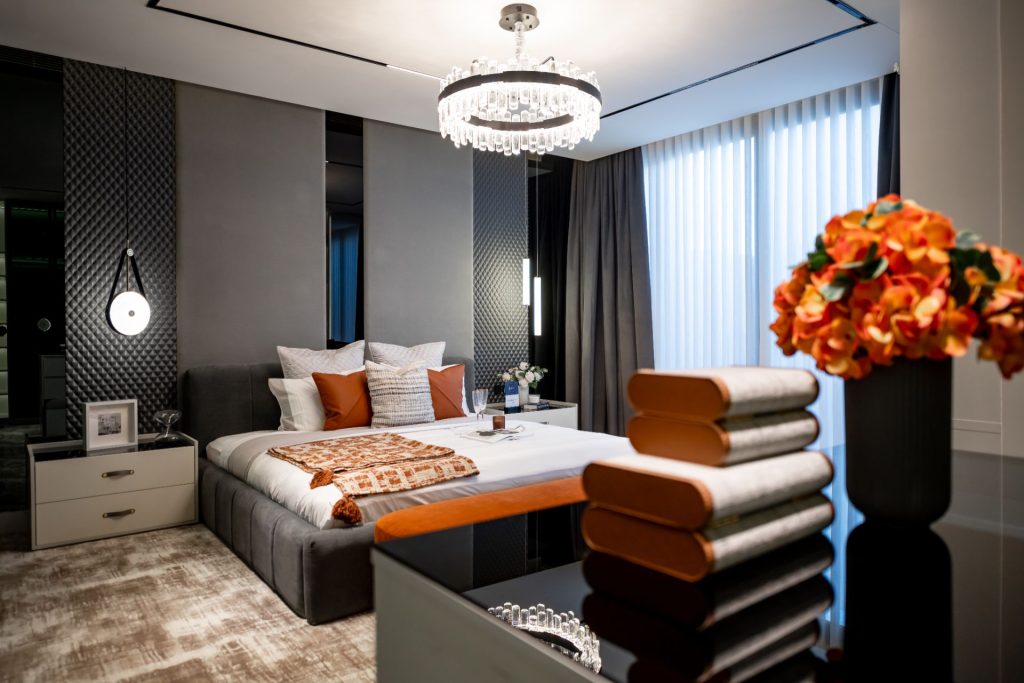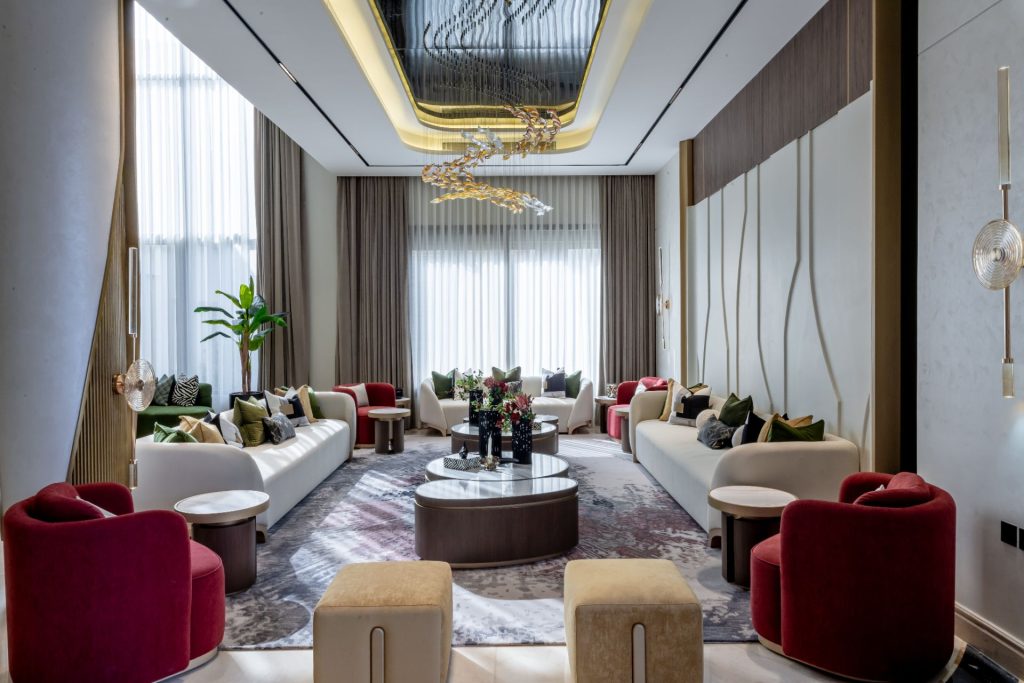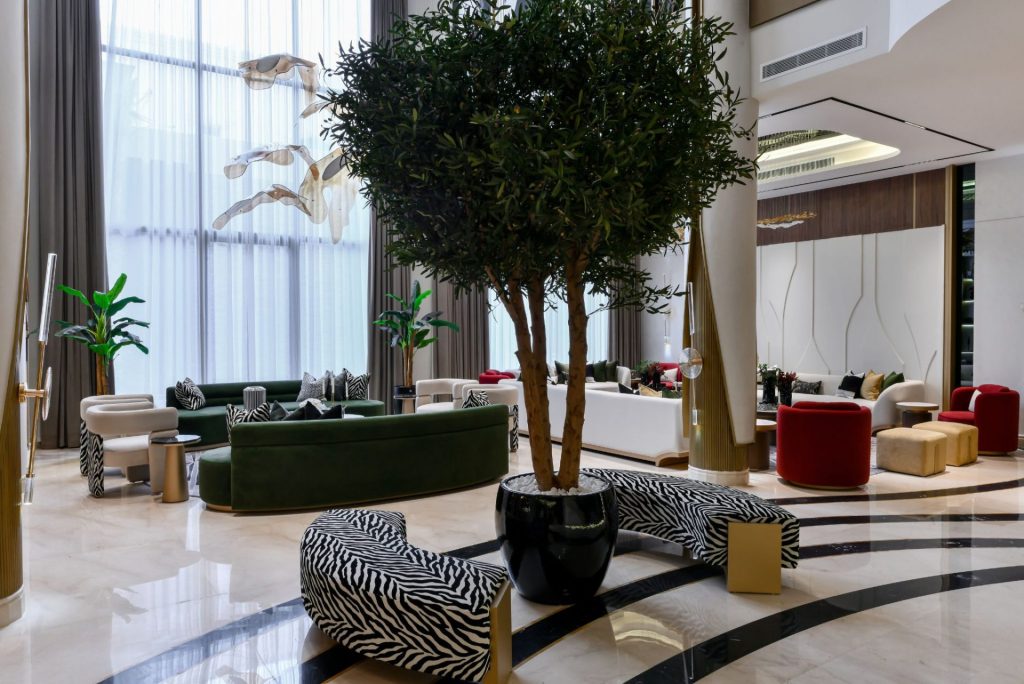
The formal majlis gets the marble. The family room gets the leftovers.
That is the quiet design failure inside thousands of otherwise beautiful Gulf villas. The room where guests sit for two hours a month is composed like a photograph, while the room where the family actually lives — where homework happens, where iftar winds down, where three generations share one screen and one sofa — is furnished from whatever remained of the budget and the attention.
It deserves better, and the market agrees. The GCC interior design industry is valued at USD 14.79 billion in 2026 and projected to reach USD 21.18 billion by 2031, with renovation and remodeling now commanding just over half of all activity, according to Mordor Intelligence. In other words, the region’s biggest design spend is no longer on new shells — it is on making existing homes live better. Add the fact that roughly 60% of GCC residents are under 30, meaning young families are now the region’s dominant design client, and the family room becomes the single most consequential space in the modern Gulf home.
As a leading interior and architectural design company working across Dubai and Riyadh, we observe a consistent truth in our residential projects: the family room is where design quality is actually felt, hour after hour, day after day. This guide collects everything we have learned into one place — the planning principles, more than twenty specific design ideas, the styles, the costs, and the mistakes to avoid.
First, Understand What a Gulf Family Room Actually Is
Before any idea can work, one distinction has to be made clearly, because it separates Gulf residential design from every Western reference you will find online.
In the GCC home, the formal majlis and the family room are two different institutions. The majlis faces outward — it receives guests, honours hospitality, and follows codes of formality and privacy. The family room faces inward — it belongs to parents, children, and grandparents, and it answers to comfort, flexibility, and daily life. Western design guides collapse these into one “living room,” which is precisely why so much imported advice fails in Dubai, Riyadh, or Doha.
In our experience, the best family rooms in the region are designed as the informal heart of the home: connected to the kitchen and garden, acoustically softened, generously seated, and completely relaxed about being lived in. Everything that follows builds on that definition.
20+ Family Room Design Ideas for Dubai & GCC Homes
We have organised these ideas the way we actually design: layout first, then seating, then materials and light, then the cultural and climate layers that make a family room genuinely belong to the Gulf.
Layout & Zoning Ideas
- Design for conversation, not for the television. The strongest shift we observe in 2026 briefs, in the Gulf and globally, is the return of the living space as a social salon — multiple small zones with intention, rather than one sofa aimed at one screen. Anchor the room around a conversation cluster, and let the screen become one zone among several rather than the altar.
- Create a “second majlis” floor lounge. A low, cushioned floor-seating zone — the informal cousin of the formal majlis — remains the most naturally Gulf idea in this entire list. Families gravitate to it instinctively, children claim it immediately, and it reconfigures for large gatherings in minutes.
- Plan a Ramadan-ready furniture arrangement. The best Gulf family rooms are designed with two layouts in mind: the everyday plan, and the gathering plan for iftar and Eid, when seating capacity may need to double. Modular sectionals, ottomans that redeploy as seats, and a clear circulation spine make the transformation effortless rather than chaotic.
- Zone with ceilings and floors, not walls. In open-plan villas, define the family room through a dropped ceiling detail, a timber-panelled ceiling raft, or a rug-and-floor transition, so the space reads as its own room while staying connected to kitchen and dining.
- Add a multipurpose games table corner. Designers globally are building dedicated game corners into living spaces, and the Gulf has its own rich material for this: a beautifully made table for baloot, carrom, or chess doubles as a homework desk, a coffee spot, and an extra serving surface when entertaining.
- Consider a convertible boundary with the majlis. Where the family room sits beside the formal majlis, a sliding mashrabiya screen or switchable smart-glass partition lets the two rooms merge for large family occasions and separate completely when guests arrive. It is one of the most requested planning devices in our recent Dubai and Riyadh villa projects.
Seating & Furniture Ideas
- Choose low-slung, deep-seated sofas. The 2026 direction is unambiguous: rigid, formal sofa sets are retreating in favour of deep, relaxed seating with real visual weight. For family rooms hosting long evenings, depth and softness are not a trend — they are the brief.
- Curve the seating for big families. Curved and ribbon-form sectionals do something rectilinear sofas cannot: they turn eight people toward each other. For the Gulf’s larger households, a generous curved composition is both sculptural and socially intelligent.
- Mix the furniture rather than matching it. Matching showroom sets are firmly out of favour with designers this year. A collected mix — a bespoke sofa, a vintage armchair, a custom ottoman — makes the room feel authored and personal rather than purchased in one afternoon.
- Upholster everything in performance fabrics. This is where luxury meets five children and Arabic coffee. Modern performance textiles are indistinguishable from fine linens and velvets to the eye, and they shrug off what family life throws at them. We specify them as standard in family zones.
- Respect the grandparents’ seat. Multigenerational living is the Gulf norm, and design should honour it: alongside the deep lounge seating, include firmer, higher chairs with proper arms that older family members can use with dignity and comfort. It is a small planning decision with enormous daily value.
- Design storage as architecture. Toys, consoles, chargers, and school bags will exist; the only question is whether they are visible. Full-height joinery walls with concealed deep drawers keep the room composed without a single plastic storage box in sight — and custom joinery is precisely where an in-house furniture studio earns its keep.
Material, Colour & Light Ideas
- Layer acoustics deliberately. Gulf villas, with their marble floors and double-height volumes, are echo machines, and the family room suffers most because it is the loudest-used room in the house. Layered rugs, upholstered walls or panels, heavy drapery, and fabric-wrapped ceiling details transform how the room sounds — which families feel before they can name it.
- Try colour drenching in a Gulf palette. One of 2026’s defining moves is wrapping walls, trim, and ceiling in a single saturated tone to create a cocooning envelope. Translated for the region, deep olive, espresso, oud brown, or desert-clay tones give the family room warmth and intimacy that stark white villas conspicuously lack.
- Mix two wood tones, never three. Pairing a light, open-grain timber such as white oak with a rich, dark wood such as smoked oak or walnut creates depth that feels collected rather than coordinated — light woods on floors and shelving to bounce daylight, darker woods on cabinetry and feature panels for grounding. Gulf design commentary in 2026 flags this as one of the highest-impact, most accessible moves available.
- Wrap a wall in books. The “library wrap” — shelving running the full length or upper perimeter of a room — is one of this year’s most loved living room ideas, and it suits the family room perfectly: it absorbs sound, displays a family’s real life, and gives children a daily, casual relationship with reading.
- Programme lighting in scenes, not switches. A family room lives many lives in one day, so give it a homework scene at 4000K brightness over the table zone, a family-evening scene at warm 2700K layers, a film scene, and a gathering scene. Invisible technology, visible effect — the guests should never see the system, only feel the atmosphere change.
- Let one artwork start the scheme. Designers increasingly begin the entire room from a single treasured piece — an artwork, a calligraphic panel, an inherited textile — and build palette and materials outward from it. For Gulf families, a commissioned Arabic calligraphy piece can anchor the room in both beauty and meaning.
Climate & Culture Ideas FOR GULF
- Design for the eight indoor months. From May to September, the family room is the family’s world, so it must carry more functional load than its equivalent in London or Paris: better ventilation and air quality, solar-control glazing, cool underfoot materials balanced with soft textiles, and enough zoned variety that a long summer indoors never feels like confinement.
- Then open it completely for the six outdoor months. Full-width sliding or pocket glass doors to a shaded terrace or courtyard let the family room double its size from October to April. When the landscape lighting and outdoor seating are designed as a continuation of the interior scheme, the garden becomes the family room’s second act.
- Build in the gahwa ritual. A discreet Arabic coffee and tea station — a marble niche with concealed water, storage for the dallah and finjan cups, and a place for dates — embeds the region’s most beloved hospitality ritual into the room’s architecture rather than leaving it to a trolley.
- Treat scent as a design layer. No Gulf family room is complete without bakhoor, so design for it: a ventilated niche for the mabkhara, finishes chosen with fragrance absorption in mind, and air circulation planned so oud drifts rather than clouds. It is a detail international designers never think of, and regional families notice immediately.
- Include a quiet prayer corner. A softly lit, uncluttered corner oriented toward the qibla, with dedicated storage for prayer mats and mushaf, serves the family’s daily rhythm with the same design care given to the cinema wall. Thoughtful homes design for the whole of life.
Family Room Styles That Work in the Gulf
Style should follow the family, not the portfolio, but four directions dominate current briefs across Dubai and the wider GCC. Warm contemporary pairs clean lines with layered natural texture and remains the leading request in communities such as Dubai Hills Estate and Tilal Al Ghaf. Contemporary Arabic translates mashrabiya patterns, craft heritage, and courtyard logic into a modern family setting, and it is increasingly chosen by Emirati and Saudi families who want their children raised amid their own visual culture. Art Deco warmth — fluting, brass, velvet, and soft geometry — brings glamour down to a livable, family-friendly register. Resort casual, with travertine, linen, and palm-framed calm, suits beachfront and garden-facing rooms where indoor and outdoor life blur.
The style that is disappearing, for good reason, is the cold all-white minimalist scheme with matching furniture: designers across the board report it retreating in favour of warmer, richer, more personal rooms — and no room rewards warmth more than this one.
What Does a Family Room Project Cost in Dubai & the GCC?
A straight answer, because you deserve one. A focused family room refresh — new seating, lighting scenes, rugs, window treatments, and styling — sits at the accessible end of residential design. A full architectural redesign, with custom joinery walls, acoustic treatment, ceiling design, integrated technology, and bespoke furniture, is a more significant investment that typically prices per square metre in line with premium villa fit-out rates, which in Dubai now routinely exceed AED 9,000 per square metre at the luxury tier.
Two facts frame the decision. Premium and luxury interior design is the fastest-growing tier in the GCC market, forecast to expand at nearly 11% annually to 2031, which means well-executed interiors increasingly hold their value at resale. And the most expensive family room is the one done twice — under-specified fabrics that fail in two years, lighting installed without scenes, storage that never matched the family’s real life. Designing it right once is always the economical path.
Final Words
A great family room in the Gulf is not a smaller majlis and not a Western living room with Arabic accessories. It is its own discipline: a room engineered for eight indoor months and opened wide for six outdoor ones, seated for three generations, softened for real acoustics, and layered with the rituals — coffee, bakhoor, gathering, prayer — that make a house belong to its family. Start with the layout, invest where hands and bodies touch the room, and treat the cultural layer as design material rather than decoration. If your family room currently feels like the space that got the leftovers, it is also the room where thoughtful design will change your daily life the most.
Frequently Asked Questions
What is the difference between a majlis and a family room?
The majlis is the formal reception space for guests, governed by hospitality traditions and privacy codes, while the family room is the private, informal living space for the household itself. In well-planned Gulf homes they are separate rooms with different furniture logic, acoustics, and even entrances — though sliding partitions can allow them to merge for large family occasions.
How big should a family room be in a Dubai villa?
Generosity matters less than proportion and zoning. A well-zoned 40-square-metre room with conversation, media, and activity areas outperforms a 70-square-metre hall with furniture floating in the middle. For multigenerational households, plan seating for the full family plus four, since Gulf family rooms absorb cousins and neighbours as a matter of routine.
Which sofa fabrics survive children, coffee, and daily use best?
High-performance woven textiles — solution-dyed acrylics and engineered polyester velvets and bouclés — now match the look and hand-feel of natural fabrics while resisting stains, sun-fade, and abrasion. In the Gulf’s strong light, fade resistance matters as much as stain resistance, so specify both.
Can a family room double as a majlis in a smaller home or apartment?
Yes, with deliberate design: a layout that shifts from relaxed to formal, seating that presents well to guests, concealed storage for family life, and lighting scenes that change the room’s register in one touch. Many of our apartment projects in Dubai are built exactly on this dual-mode logic.
How do I keep an open-plan family room from feeling noisy and chaotic?
Attack the acoustics and the sightlines. Layered rugs, upholstered surfaces, drapery, and ceiling treatments cut echo dramatically, while joinery-based storage removes visual noise. Zoning the room into defined areas then gives simultaneous activities — homework, television, conversation — their own territory.
Do these ideas apply outside Dubai, in Saudi Arabia and the wider GCC?
Almost entirely, because the underlying drivers — climate, multigenerational living, hospitality culture, and the majlis-versus-family-room distinction — are shared across the Gulf. Riyadh briefs tend toward slightly more formality and privacy; coastal Emirati homes lean more open and resort-like. The framework holds; the accent shifts.